

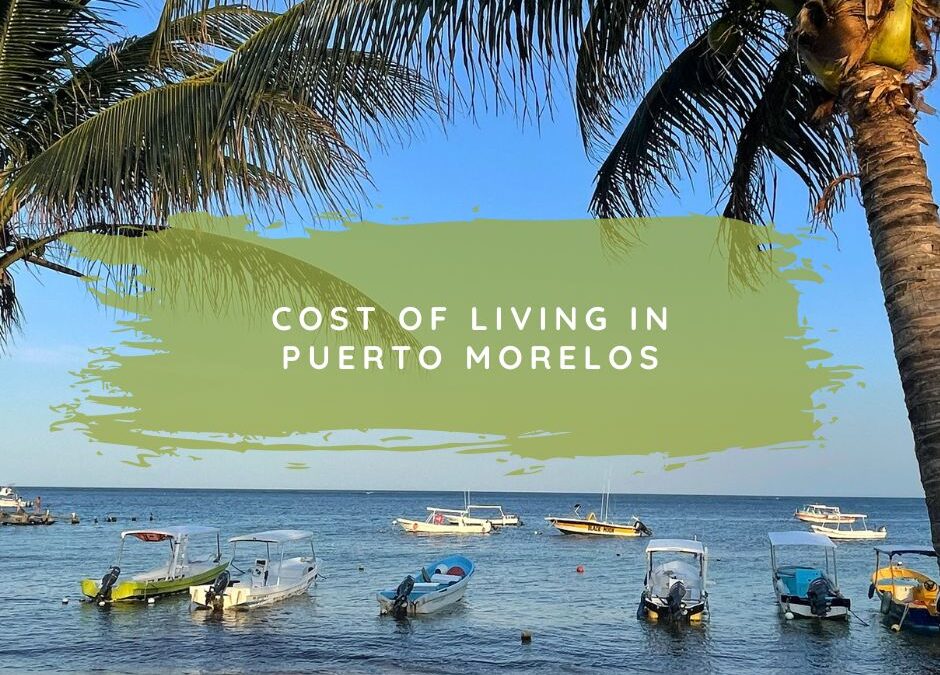
People often wonder about the cost of living here in Puerto Morelos, so we thought we’d compile a list of basic services and what we pay for them here to give you an idea. It is more expensive to live here than you might think – and definitely more expensive than less tourist driven areas of Mexico.
(Calculations based on the current MXN 18.5/1 USD exchange rate)
La gente a menudo se pregunta sobre el costo de vida aquí en Puerto Morelos, así que pensamos en recopilar una lista de servicios básicos y lo que pagamos por ellos aquí para darte una idea. Vivir aquí es más caro de lo que podrías pensar – y definitivamente más caro que en áreas de México menos impulsadas por el turismo.
(Cálculos basados en la tasa de cambio actual de 18.5 MXN/1 USD)
Rent/Renta
Rent will be your biggest expense and varies widely by location and amenities. For a 2BR/1 BA in a gated community in the colonia, you’re looking at somewhere around $10,000-15,000 MXN ($540-$810 USD) per month. If you’re renting a larger home or in a higher end neighbourhood, it could easily be $25,000 MXN ($1351 USD) or more.
La renta será tu gasto más grande y varía mucho según la ubicación y las amenidades. Por un 2 recámaras/1 baño en un fraccionamiento en la colonia, estarías pagando alrededor de $10,000-15,000 MXN ($540-$810 USD) al mes. Si rentas una casa más grande o en un vecindario de mayor nivel, fácilmente podría ser $25,000 MXN ($1351 USD) o más.
Utilities/Servicios
Electricity – CFE bills come out every 2 months and vary widely by lifestyle. Some folks pay as little as $500 MXN, but if you’re like me and need the a/c on be prepared to spend $2,000 MXN (if you have fans and double inverter a/c units) or $4000+ MXN (if you have fans and regular a/c units). More if you have multiple a/c running at the same time.
Phone – I use Telcel and pay $300 MXN/month for that. It covers 5.5 GB of data, and unlimited calls, texts, WhatsApp and Facebook. I only run out of data if I forget and don’t use the wifi at home.
Internet – depending on your provider, it can be as low as $500 MXN all the way up to $1200 MXN (Starlink). The TelMex fiber optic service has a good reputation in many parts of town, PRV is another popular option.
Drinking Water – La Ceiba will bring garrafones (20L/5 gal) of water to your house for $24 MXN. You can also buy it at stores, or refill your own garrafones at stations located in the colonia.
Water utility – $285 MXN per month seems to be the standard rate these days.
Gas (cooking, dryer, hot water) – my 20L tank lasts me (1 person) about 9 months and costs under $500 MXN to refill. Many houses have stationary tanks on their roofs, which hold larger quantities and cost more to refill.
Looking for information on how to set up your utilities for your new home? See our blog here.
Electricidad – Los recibos de CFE llegan cada 2 meses y varían mucho según el estilo de vida. Algunas personas pagan tan poco como $500 MXN, pero si eres como yo y necesitas el aire acondicionado, prepárate para gastar $2,000 MXN (si tienes ventiladores y minisplits inverter) o $4000+ MXN (si tienes ventiladores y aires acondicionados normales). Más si tienes varios a/c funcionando al mismo tiempo.
Teléfono – Uso Telcel y pago $300 MXN/mes. Cubre 5.5 GB de datos y llamadas, mensajes, WhatsApp y Facebook ilimitados. Solo me quedo sin datos si me olvido de usar el wifi en casa.
Internet – dependiendo de tu proveedor, puede ser tan bajo como $500 MXN hasta $1200 MXN (Starlink). El servicio de fibra óptica de TelMex tiene buena reputación en muchas partes del pueblo, PRV es otra opción popular.
Agua potable – La Ceiba llevará garrafones (20L/5 gal) de agua a tu casa por $24 MXN. También puedes comprarlos en tiendas o rellenar tus propios garrafones en estaciones de la colonia.
Aguakan – $285 MXN al mes parece ser la tarifa estándar hoy en día para el servicio de agua no potable.
Gas (cocina, secadora, agua caliente) – Mi tanque de 20L me dura (1 persona) unos 9 meses y cuesta menos de $500 MXN rellenarlo. Muchas casas tienen tanques estacionarios en los techos, que almacenan más cantidad y cuestan más rellenarlos.
¿Buscas información sobre cómo contratar tus servicios para tu nuevo hogar? Mira nuestro blog aquí.
Transportation/Transporte
The PM colectivos are a very inexpensive option at $10 MXN per trip. Taxis are a bit more, but still reasonable – anywhere from $60-80 MXN if you’re going to the main areas of town. There are also collectivos all the way from PM to Cancun, Playa del Carmen or even Leona Vicario, which cost between $35-50 MXN. Read more on our Transportation blog.
Los colectivos de PM son una opción muy económica a $10 MXN por viaje. Los taxis son un poco más caros, pero aún razonables – entre $60-80 MXN si vas a las zonas principales del pueblo. También hay colectivos desde PM hasta Cancún, Playa del Carmen o incluso Leona Vicario, que cuestan entre $35-50 MXN. Lee más en nuestro blog de Transporte.
Food/Comida
Groceries – I’m going to leave this out of my calculations because this is also very dependent on your lifestyle. If you’re balling on a budget, eat like locals do, with Mexican brands and lots of made-from-scratch meals at home to get the most bang for your buck.
I do have my US favorites of a few key products – peanut butter, ketchup, and coffee creamer being the big ones that I’ll splurge on. However, a $6-7 bag of US brand chips or other snack items? I’ll pass – the Mexican options are just as good and it’s a flavor adventure trying new treats! Fruterias are also a great spot for fresh fruits, veggies, and juices. Wondering where to shop? Check out our blog on groceries.
Pro-Tip: Be sure to tip your grocery bagger, as they do not receive a salary from the store! I generally tip around $20-40 pesos depending on the size of my order and what small bills/coins I have on hand.
Dining Out – If you’re dining out, costs will vary widely between portside and colonia restaurants. Whether or not you drink alcohol can also dramatically affect your bill. I would say in the colonia, I typically spend under $200-$250 ($10-15) MXN for a meal without alcohol. On the portside, it’s easy to spend at least $400 MXN ($20-25) without alcohol.
Delivery – Especially during the summer months, I often prefer delivery to my home where I can sit and eat in the a/c sans bug spray. Most restaurants offer delivery if you contact them. Another fun option is to explore the Facebook groups offering food delivery, where you’ll find Mexican food from around the country at very reasonable prices. Some of my favorites still only charge around $80-150 MXN ($4-8 USD) – and some of those even include delivery!
We’ve got a whole post about delivery and errand services in town – not just for restaurants – they’ll also deliver groceries, medicine, pay your utility bills, etc – if you want to check that out.
Supermercado – Voy a dejar esto fuera de mis cálculos porque depende mucho de tu estilo de vida. Si tienes un presupuesto ajustado, come como los locales, con marcas mexicanas y muchas comidas caseras hechas desde cero para aprovechar más tu dinero.
Yo sí tengo mis favoritos de EE.UU. en algunos productos clave – mantequilla de maní, catsup y crema para café son los principales en los que gasto. Sin embargo, ¿una bolsa de papas fritas de marca de EE.UU. de $6-7USD u otros snacks? Paso – las opciones mexicanas son igual de buenas y es una aventura probar nuevos sabores. Las fruterías también son un excelente lugar para frutas, verduras y jugos frescos. ¿Quieres saber dónde comprar? Revisa nuestro blog sobre víveres.
Consejo Pro: Asegúrate de dar propina al empacador, ya que no reciben salario de la tienda. Generalmente doy entre $20-40 MXN dependiendo del tamaño de mi compra y del cambio que tenga.
Salir a comer – Si comes fuera, los costos varían mucho entre los restaurantes de la zona del puerto y los de la colonia. El hecho de que bebas alcohol o no también puede afectar mucho tu cuenta. Diría que en la colonia gasto típicamente menos de $200-$250 MXN ($10-15 USD) en una comida sin alcohol. En la zona del puerto, es fácil gastar al menos $400 MXN ($20-25 USD) sin alcohol.
Comida a domicilio – Especialmente en verano, a menudo prefiero pedir comida a domicilio y comer en casa con aire acondicionado sin repelente. La mayoría de los restaurantes ofrecen entrega si los contactas. Otra opción divertida es explorar los grupos de Facebook que ofrecen comida a domicilio, donde encontrarás comida mexicana de todo el país a precios muy razonables. Algunos de mis favoritos todavía cobran solo alrededor de $80-150 MXN ($4-8 USD), ¡y algunos incluso incluyen el envío!
Tenemos una publicación completa sobre servicios de entrega y mandados en el pueblo – no solo de restaurantes – también entregan víveres, medicinas, pagan tus recibos, etc.
So what does that mean for you?
On the VERY conservative side, without including food, you’re probably looking at around $15,000 MXN or $810 USD per month. But when you add in food as well as things like entertainment, medical expenses, personal hygiene, clothing, travel, a vehicle, insurance, etc., your total can quickly sky rocket.
I’d say, you’d be best to budget more like $2,000-$2,500+ USD per month to live here comfortably on par with what you’re used to from back home in the US or Canada.
It’s an eye opening amount when you consider that the local average monthly income is only $8500 MXN or between $400-$500 USD, isn’t it?
¿Qué significa eso para ti?
En el lado MUY conservador, sin incluir comida, probablemente estés viendo alrededor de $15,000 MXN o $810 USD al mes. Pero cuando agregas comida, así como entretenimiento, gastos médicos, higiene personal, ropa, viajes, un vehículo, seguro, etc., tu total puede subir rápidamente.
Yo diría que lo mejor es presupuestar más bien entre $2,000-$2,500+ USD al mes para vivir cómodamente al nivel al que estás acostumbrado en EE.UU. o Canadá.
Es una cantidad reveladora cuando consideras que el ingreso mensual promedio local es de solo $8500 MXN o entre $400-$500 USD, ¿verdad?
Gentrification
If you’ve been following news in Mexico, you’re probably aware of the issues of gentrification that are causing strain between local people and immigrants like us in various areas of the country like Mexico City and the state of Yucatán. It is a delicate subject and one that can be difficult for us to think about, but one that I think we must think about: Am I hurting or helping the local people in my new home?
Debbie Vorachen is a Dutch Cultural Anthropologist (MA) specialized in Intercultural Communication who summed up the issues nicely in her post “Gentrification in Mexico: What’s Your Part and How to Make a Constructive Contribution”. Please go read that to gain a better understanding of the issues and what gentrification is, then pop back here for my closing thoughts.
Gentreficación
Si has estado siguiendo las noticias en México, probablemente sepas sobre los problemas de gentrificación que están causando tensiones entre los locales y los inmigrantes como nosotros en varias áreas del país como Ciudad de México y el estado de Yucatán. Es un tema delicado y difícil de pensar, pero uno en el que creo que debemos reflexionar: ¿Estoy ayudando o perjudicando a la gente local en mi nuevo hogar?
Debbie Vorachen es una antropóloga cultural holandesa (MA) especializada en Comunicación Intercultural, quien resumió muy bien estos temas en su publicación “Gentrificación en México: ¿Cuál es tu papel y cómo hacer una contribución constructiva?”. Por favor, léela para entender mejor los problemas y qué es la gentrificación, y luego regresa aquí para mis reflexiones finales.
Closing thoughts: Be a good neighbor
Based on points that Debbie Vorachen made in her article above, these are my suggestions for you as you research and/or settle into a new cross-cultural community:
- Learn Spanish. This opens up a world of opportunities for involvement in your new community and understanding of the culture and history here. This shows your efforts to love and respect your new neighbors.
- Go outside of immigrant (expat) hangouts and engage with local Mexicans for more than just the goods and services you need. Participate in your local community. Talk with your neighbors. Attend cultural events. Volunteer for a cause you’re passionate about. Help with fundraisers for local causes.
- Support local small businesses as much as possible instead of the big box stores or restaurant chains. Remember, the more you support local businesses the more the whole community can thrive.
- Protect the reef, mangrove, and cenotes as they are natural resources that serve us all and attracted most of us to this area. We can all do our part to reduce our negative impact on the environment. Pick up trash around you on the beach or near your home. Recycle. Utilize re-useable cups, dishes, and shopping bags. Wear a rashguard at the beach instead of sunscreen.
- Only buy from licensed real estate agencies with ethical standards. Do your due diligence about renting from individuals, as there are a number of rental scammers in the area. If you’re not sure who to trust, search the Facebook groups for businesses who have been recommended by folks who live here. Check out pages such as Facebook Marketplace or local Facebook rental groups, to know the “real” price of housing.
By simply paying a higher rent (because we can) without understanding the true going rate in the community, prices keep going up and we can price locals out of available housing which is not fair and hurts our Mexican neighbors.
Reflexiones finales: Sé un buen vecino
Basado en los puntos que Debbie Vorachen hizo en su artículo, estas son mis sugerencias mientras investigas y/o te estableces en una nueva comunidad intercultural:
- Aprende español. Esto abre un mundo de oportunidades de participación en tu nueva comunidad y comprensión de la cultura e historia de aquí. Muestra tu esfuerzo por amar y respetar a tus nuevos vecinos.
- Sal de los lugares de inmigrantes y convive con mexicanos locales más allá de solo los bienes y servicios que necesitas. Participa en tu comunidad local. Habla con tus vecinos. Asiste a eventos culturales. Haz voluntariado en una causa que te apasione.
- Apoya a los pequeños negocios locales lo más posible en lugar de las grandes cadenas. Recuerda: cuanto más apoyes a los negocios locales, más puede prosperar toda la comunidad.
- Protege el arrecife, el manglar y los cenotes, ya que son recursos naturales que nos sirven a todos y que atrajeron a la mayoría de nosotros a esta zona. Todos podemos hacer nuestra parte para reducir el impacto negativo en el medio ambiente. Recoge basura en la playa o cerca de tu casa. Recicla. Usa vasos, platos y bolsas reutilizables. Usa una camiseta de manga larga en la playa en lugar de bloqueador solar.
- Solo compra con agencias inmobiliarias con licencia y estándares éticos. Haz tu investigación al rentar con particulares, ya que hay muchos estafadores de renta en la zona. Si no estás seguro de en quién confiar, busca en grupos de Facebook negocios recomendados por residentes. Mira páginas como Facebook Marketplace o grupos de renta locales para conocer el precio “real” de la vivienda.
Simplemente al pagar una renta más alta (porque podemos) sin entender el precio verdadero en la comunidad, hace que las rentas siguen subiendo desmedidamente y podemos sacar a los locales del mercado de inmuebles, lo cual no es justo y perjudica a nuestros vecinos mexicanos.
We’ve given you a lot to think about as you start thinking about moving to Mexico and what that means for your budget and your lifestyle. If you need more resources about moving to Mexico, I’d recommend checking out Run Away Realty (who provided so much information via their videos as I was preparing for my move) and also Reef Realty (who helped me sell one house and buy another here in 2024). Both are well respected in the community and are licensed, ethical, realtors.
Most importantly, I hope we’ve helped you think about how to be a good neighbor here as well.
Te hemos dado mucho en qué pensar mientras consideras mudarte a México y lo que eso significa para tu presupuesto y tu estilo de vida. Si necesitas más recursos sobre mudarte a México, recomiendo revisar Run Away Realty (quienes compartieron mucha información en sus videos mientras me preparaba para mi mudanza) y también Reef Realty (quienes me ayudaron a vender una casa y comprar otra aquí en 2024). Ambos son respetados en la comunidad y son agentes con licencia y éticos.
