

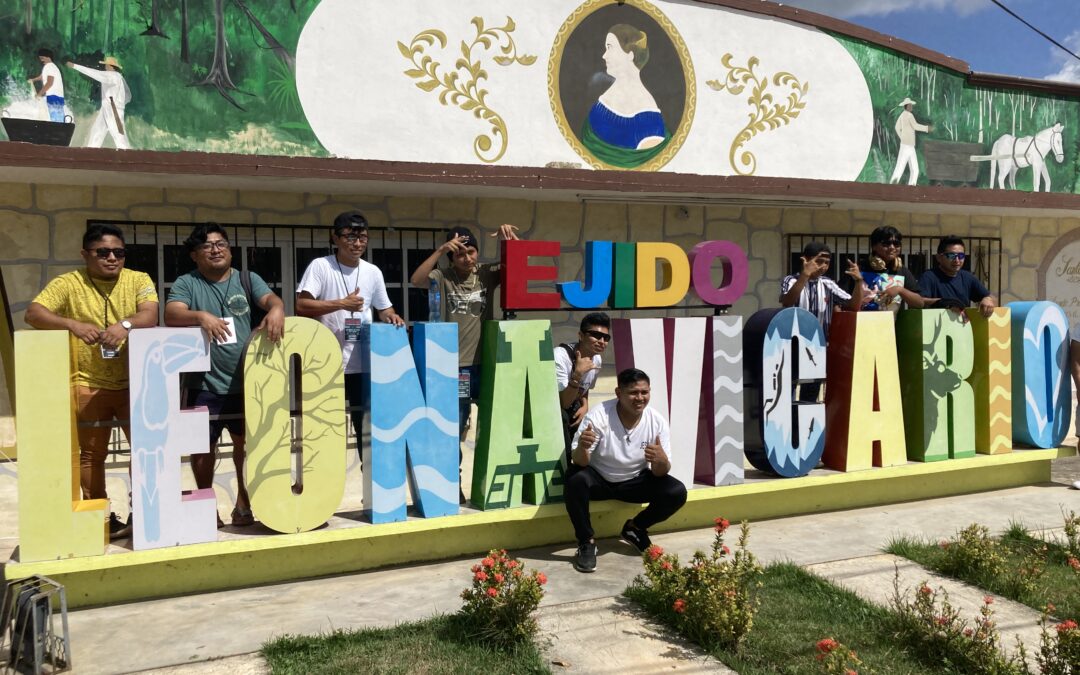
If you’ve looked at a map of the area or done research on the young municipality of Puerto Morelos, you’ve probably seen the names Leona Vicario and Quintana Roo.
Si has visto un mapa de la zona o investigado sobre el joven municipio de Puerto Morelos, probablemente hayas visto los nombres Leona Vicario y Quintana Roo.

You see, the nearby town of Leona Vicario is part of the municipality of Puerto Morelos, located in the Mexican state of Quintana Roo. But where did those names come from and why are they important? I recently went to a cultural workshop put on by the Ayuntamiento de Puerto Morelos, where I learned about this famous heroine of the Mexican revolution.
Verás, el pueblo cercano de Leona Vicario forma parte del municipio de Puerto Morelos, ubicado en el estado mexicano de Quintana Roo. Pero, ¿de dónde vienen esos nombres y por qué son importantes? Recientemente asistí a un taller cultural organizado por el Ayuntamiento de Puerto Morelos, donde aprendí sobre esta famosa heroína de la Revolución Mexicana.

Leona Vicario (short for her full name of María de la Soledad Leona Camila Vicario Fernández de San Salvador!) was born in Mexico City to her wealthy, upper class Spanish father Gaspar and her mother Camila who was from Toluca, Mexico. She was their only daughter, and was orphaned young at the age of 18.
Leona Vicario (abreviatura de su nombre completo: María de la Soledad Leona Camila Vicario Fernández de San Salvador) nació en la Ciudad de México, hija de Gaspar, un padre español adinerado de la alta sociedad, y de Camila, originaria de Toluca, México. Fue su única hija y quedó huérfana a temprana edad, a los 18 años.
When her parents passed away, Leona was cared for by her uncle Augustín, who was a prominent attorney. Because of her family’s wealth and position, Leona was able to study art and science and became critical of the culture of the wealthy class. She is known as the first female journalist in Mexico and went on to write articles for several large newspapers, which caught the interest of people working for the liberation of Mexico from Spain. Leona began to send information about events in Mexico City to the liberation movement, as well as using some of her wealth to support their work.
Cuando sus padres fallecieron, Leona quedó al cuidado de su tío Agustín, un abogado destacado. Gracias a la riqueza y posición social de su familia, Leona pudo estudiar arte y ciencia, y llegó a ser crítica de la cultura de la clase alta. Ella es conocida como la primera periodista en México y llegó a escribir artículos para varios periódicos importantes, lo que atrajo la atención de personas que trabajaban por la liberación de México del dominio español. Leona comenzó a enviar información sobre los acontecimientos en la Ciudad de México al movimiento de liberación, además de utilizar parte de su fortuna para apoyar su causa.
Leona’s uncle Augustín strategically arranged for her marriage to Octavario Obregon, who was also an attorney and colonel, but Leona was not in love with him. Eventually Octavario was sent to Spain, and in 1809 Leona met Andrés Quintana Roo who would later become her husband.
El tío de Leona, Agustín, organizó estratégicamente su matrimonio con Octavario Obregón, quien también era abogado y coronel, pero Leona no estaba enamorada de él. Eventualmente, Octavario fue enviado a España, y en 1809 Leona conoció a Andrés Quintana Roo, quien más tarde se convertiría en su esposo.
At great personal risk, Leona began working with Las Guadalupes, a secretive group of women fighting for the independence of Mexico from Spain. She helped in any way that she could, including sending secret messages, providing medications and supplies, and funding for the efforts. In 1813 she had to flee her home because she was discovered and her wealth and possessions were expropriated. She was captured, but later freed by the liberation movement. In 1815, Leona married Quintana Roo and they went on the run together, finding refuge in Oaxaca. Leona continued to work as a journalist and together the couple fought for Mexico’s freedom, later joining forces with José Marìa Morelos and Pavón.
A gran riesgo personal, Leona comenzó a colaborar con Las Guadalupes, un grupo secreto de mujeres que luchaban por la independencia de México del dominio español. Ayudaba en todo lo que podía, incluyendo el envío de mensajes secretos, la provisión de medicamentos y suministros, y el financiamiento de los esfuerzos. En 1813 tuvo que huir de su hogar porque fue descubierta y sus bienes y posesiones fueron expropiados. Fue capturada, pero más tarde liberada por el movimiento de liberación. En 1815, Leona se casó con Quintana Roo y huyeron juntos, encontrando refugio en Oaxaca. Leona continuó trabajando como periodista y, junto con su esposo, luchó por la libertad de México, uniéndose más adelante a las fuerzas de José María Morelos y Pavón.
In 1817, just after Leona gave birth to the couple’s first daughter, they were discovered and imprisoned, but later both were granted amnesty. They remained in Toluca until Mexico gained independence in 1821. The new government returned part of her estate to her, namely a house in Mexico City, where she lived until she passed away in 1842.
En 1817, justo después de que Leona diera a luz a la primera hija de la pareja, fueron descubiertos y encarcelados, pero más tarde ambos recibieron amnistía. Permanecieron en Toluca hasta que México logró su independencia en 1821. El nuevo gobierno le devolvió parte de sus bienes, específicamente una casa en la Ciudad de México, donde vivió hasta su fallecimiento en 1842.
“Leona Vicario and her husband are buried together at Independence Column in Mexico City. She was named the “Sweet Mother of the Fatherland” (Benemerita y Dulcisima Madre de la Patria) by a special commission ordered by then President Antonio López de Santa Anna in August 1842, only days after her death. She was buried in Mexico City and is the only civilian woman to have received a State Funeral.”
“Leona Vicario y su esposo están enterrados juntos en la Columna de la Independencia en la Ciudad de México. Fue nombrada la “Dulcísima Madre de la Patria” (Benemérita y Dulcísima Madre de la Patria) por una comisión especial ordenada por el entonces presidente Antonio López de Santa Anna en agosto de 1842, pocos días después de su muerte. Fue sepultada en la Ciudad de México y es la única mujer civil que ha recibido un funeral de Estado.”
Here’s a video that explains Leona Vicario’s life in more detail.
Aquí tienes un video que explica con más detalle la vida de Leona Vicario.
(Audio is in Spanish, but you can adjust your YouTube settings and it will auto-translate to your native language.)
2020 was declared the Year of Leona Vicario by the Mexican government to honor her legacy. She was strong, brave, intelligent, did groundbreaking work as the first female journalist, and willing to get her hands dirty to fight for what she believed in. It’s no wonder that towns, schools, and statutes all bear her name. I’m thankful for the reminder of her heroism and hope that this inspires others to use their voices to do good in the world around them too.
El año 2020 fue declarado el Año de Leona Vicario por el gobierno mexicano para honrar su legado. Fue una mujer fuerte, valiente, inteligente, pionera como la primera periodista del país, y dispuesta a ensuciarse las manos para luchar por lo que creía. No es de extrañar que su nombre lo lleven pueblos, escuelas y estatuas. Estoy agradecida por este recordatorio de su heroísmo y espero que inspire a otros a usar su voz para hacer el bien en el mundo que los rodea.


If you haven’t been to Leona Vicario yet, take this as your sign that you should go check it out. I highly recommend the Mueso Tuukul Taam and the Saturday morning market, but there are also lots of great little restaurants to dine in, cute little shops, garden centers/viveros where you can buy plants for your yard, lots of moto-taxis, and a truly Mexican vibe. It’s well worth the trip!
Si aún no has visitado Leona Vicario, toma esto como una señal de que deberías ir a conocerlo. Te recomiendo mucho el Museo Tuukul Taam y el mercado de los sábados por la mañana, pero también hay muchos restaurantes pequeños y buenos para comer, tienditas encantadoras, viveros donde puedes comprar plantas para tu jardín, muchas moto-taxis y un ambiente verdaderamente mexicano. ¡Vale mucho la pena el viaje!
